
Finding Eagle Pass Resident Records
Eagle Pass is the Maverick County seat, so a useful resident trail is concentrated among county offices, City Hall, and state services. The answer changes with the question. Maverick County Appraisal District is the best starting point for a current parcel owner or a known address. The Texas Secretary of State route is for an individual voter-status check. A recorded deed identifies parties to a transfer, while the municipal court and district-clerk paths concern a case rather than a household list.
No public source makes a complete list of everyone at an address. Property data mainly identifies owners, and tax correspondence can go to a post office box or an out-of-town address. Use each record for the fact it actually supports, then compare names, dates, legal descriptions, and locations before treating two matches as the same person.
- Run the known address or owner name in the Maverick CAD property search and save the Property ID, Geographic ID, situs, and legal description.
- For an individual registration question, use the Texas voter route with the required personal details rather than treating it as a street roster.
- Use the County Clerk deed index to connect a parcel to grantors, grantees, a recording date, and book or instrument references.
- For an older household, compare newspapers, microfilm, and the federal census with the address or surname.
- When an online index stops, send a specific request to the custodian or ask for the relevant counter, book, reel, or copy procedure.
Note: A name match becomes more reliable when two independent records agree on a date, address, legal description, or family relationship.
Eagle Pass Resident Records Offices
Each office holds a different piece of Eagle Pass resident evidence. The Maverick County Clerk records land instruments, local vital events, probate, assumed names, and county-court work. The appraisal district maintains the parcel roll. The Elections Administrator manages voter registration, while the City Secretary is custodian of the city’s official and permanent records. Office names matter because a court docket, a deed image, and a certified vital record cannot be obtained from the same desk.
Maverick County Clerk
500 Quarry St., Suite 2
Eagle Pass, TX 78852
830-773-2829
Maverick County Appraisal District
2243 N. Veterans Blvd.
Eagle Pass, TX 78852
830-773-0255
Maverick County Elections
501 E. Main St., Suite B
Eagle Pass, TX 78852
830-757-4175
For the street-by-street parcel chain, use the detailed Eagle Pass street directory workflow rather than relying on a single owner-name result.
Eagle Pass CAD Owner Search
The Maverick CAD search is the fastest current property lead. Its owner route accepts a last name followed by a first name, and the address route separates Street Number from Street Name. CAD advises searchers to omit a prefix, suffix, and unit from the street-name field and to try only the street name if a full address fails. The result can show the owner, situs address, mailing address, legal description, property and geographic identifiers, value history, exemptions, tax history, and a deed-history block.
| CAD field | How it works | Why retain it |
|---|---|---|
| Owner Name | Text, last name first; one name component can work | Starts a current ownership check |
| Street Number and Street Name | Separate text fields; omit prefix, suffix, and unit | Finds address-keyed parcel records |
| Property ID and Geographic ID | Optional stable identifiers | Bridges later deed, plat, and tax research |
| Subdivision and Neighborhood | Advanced list controls | Helps separate similar street results |
A mailing address is the tax-notice destination, not proof that an owner lives at the parcel. CAD also cautions that legal descriptions and acreage need verification with the district. Preserve both address types and the tax year when comparing Eagle Pass records.
Eagle Pass Voter Status Paths
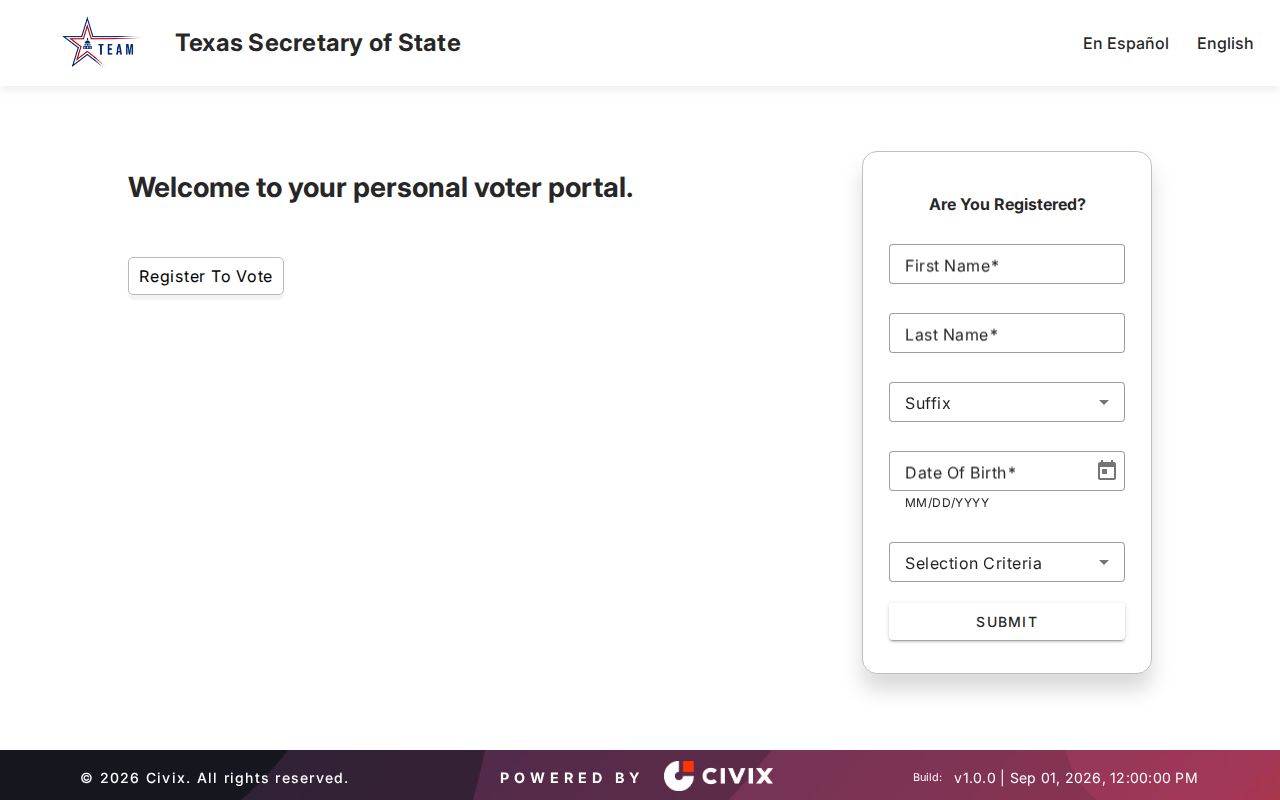
Texas My Voter Portal is an individual-check route, not a browsable Eagle Pass residents directory. The official paths use a Voter Unique Identifier with date of birth, a Texas driver’s-license number with date of birth, or a first and last name together with county, date of birth, and ZIP. A result may help the voter verify registration status, polling information, and related registration details. It does not disclose ballot choices.
Texas My Voter Portal is shown in the captured form below. The screen is useful for understanding the individual routes, but live labels may change because the portal depends on JavaScript.
For a larger official voter file, Form 24-1 permits filters such as county, precinct, mailing-address choices, age, and election participation. It requires a notarized noncommercial-use affidavit, a $75 deposit, and full payment before release. Protected addresses and sensitive identifiers remain withheld under Texas election law.
Note: Voter-file information used to advertise or promote commercial products or services carries a Class A misdemeanor restriction under the Texas Election Code.
Eagle Pass Deed Index Boundary
Maverick County’s online land trail has a sharp date boundary. The TexasFile Maverick County Clerk Records Search displays a full index beginning July 29, 1992. It supports name, instrument number, volume and page, reference, legal-description fields, and date-range searching. Result rows can include date, instrument type, grantor, grantee, book or page reference, and legal description. A free registration or login is required, and image or high-quality PDF access can carry charges.
Before that online window, the Texas State Library lists Maverick deed and deed-of-trust indexes for 1871-1923 on microfilm, with early deed books on listed reels. The research path therefore changes from a web index to the County Clerk, Texas A&M International University in Laredo, and possible FamilySearch equivalents. That distinction is especially important when an Eagle Pass address has an older title history.
| Grantor | The party transferring an interest |
|---|---|
| Grantee | The party receiving an interest |
| Index | A finding tool that points to a record, not necessarily the record image itself |
| Criss-cross directory | An address-first directory format, if a local run can be verified |
The 1992 online cutoff and the 1871-1923 microfilm index are a core Eagle Pass records story. They explain why a current parcel search may be quick while the same address’s nineteenth-century chain needs an archive call.
Eagle Pass Court Name Checks
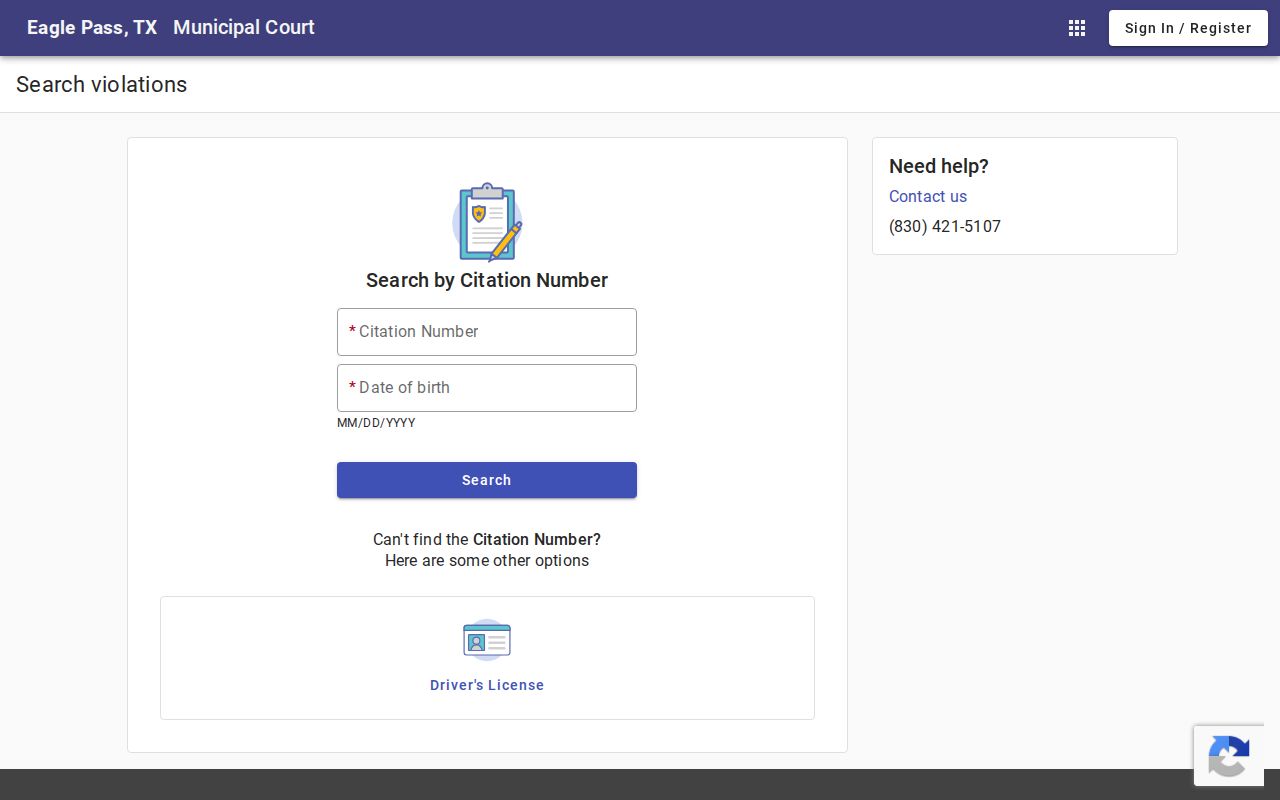
Court material can put a name in a case, but it does not create a general resident list or prove identity by itself. Eagle Pass Municipal Court offers an online lookup by citation number, driver’s license, Social Security number, vehicle information, name, or business name. The name route uses first name, last name, and date of birth. Municipal results should be read as citation or case information, then verified with the file, disposition, and another identifier.
The municipal court search captured below shows the case-search surface. The court also publishes dated docket PDFs, while its City page describes an online court-records request route whose field inventory and fees were not exposed in the research.
For district-level files, re:SearchTX may require an eFileTexas account and does not replace the local clerk. Texas Judicial Branch warns there is no one universal statewide trial-court search. Sealed, juvenile, adoption, protected-victim, and expunged material may be unavailable or redacted.
Current Eagle Pass Resident Sources
Current Eagle Pass records are best treated as focused rolls, not one master directory. The property roll identifies ownership and parcel context. Voter tools concern registration. Recorded instruments identify parties to a transaction. City staff pages identify public employees, not home addresses. Each source has a keeper, a date range, and its own access limits.
| Source | What it can establish | Custodian | Access route |
|---|---|---|---|
| CAD parcel record | Owner, situs, tax mailing address, legal description | Maverick CAD | Free public search |
| Recorded land index | Grantor, grantee, instrument and legal tract | Maverick County Clerk | TexasFile, clerk, or microfilm |
| Voter-status route | An individual’s registration information as allowed | Texas Secretary of State / county registrar | My Voter Portal |
| Municipal court docket | A named role in a public city case | Eagle Pass Municipal Court | Online search, docket, or records request |
| City staff directory | Public city-office contacts | City of Eagle Pass | City directory search |
For an old address or a person who no longer owns property, the source date may matter more than the latest search result. Compare a current parcel card with a deed, vital index, or newspaper citation from the relevant period.
Eagle Pass Vital Record Custodians
Birth, death, marriage, and divorce records do not follow one Eagle Pass route. The Maverick County Clerk handles local birth, death, and marriage records. The Maverick District Clerk holds local divorce files. Texas DSHS supplies statewide copies, verification letters, and indexes. DSHS says birth records become public after 75 years and death records after 25 years under Texas Government Code §552.115. Current certificates remain restricted to qualified applicants.
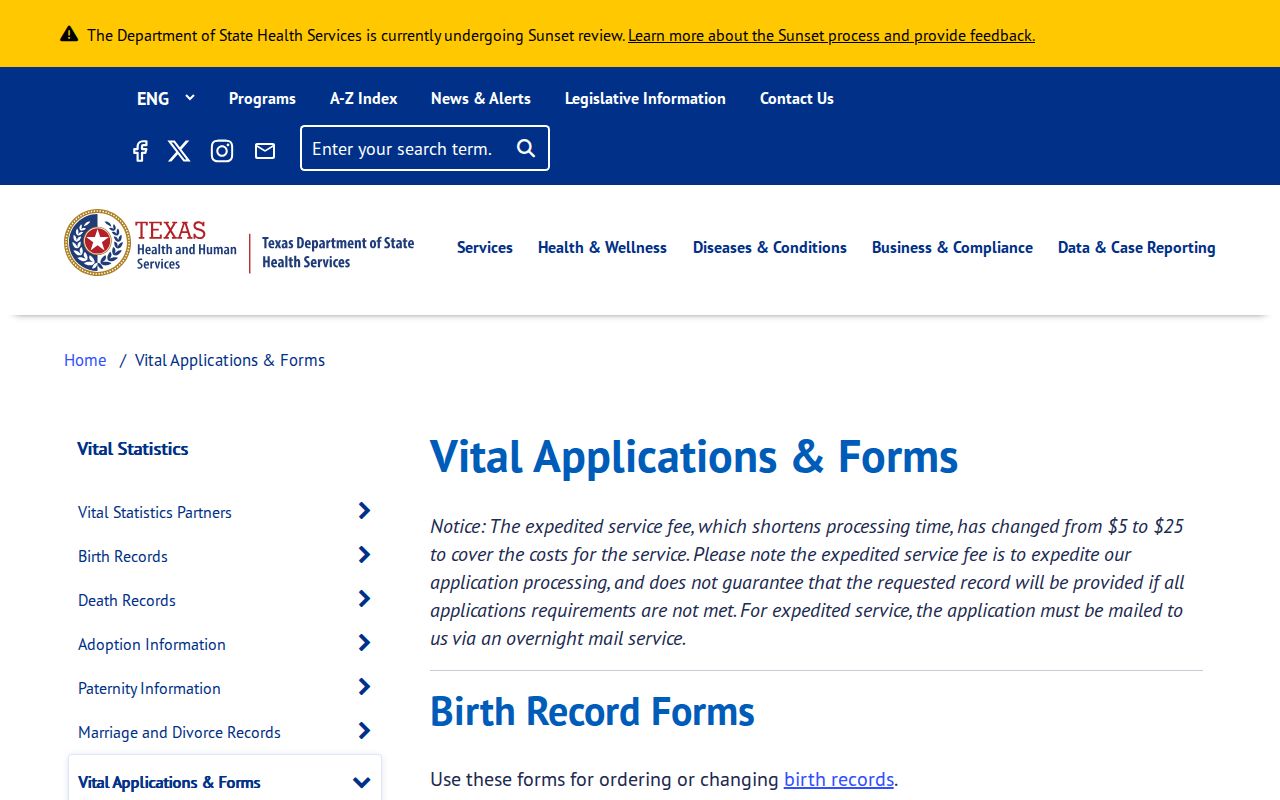
The DSHS vital forms index displays the current applications used for statewide requests. It links to birth, death, marriage, divorce, adoption, and parentage forms rather than offering a broad person search.
DSHS reports digital birth indexes from 1925 and death indexes from 1965, with earlier microfiche beginning in 1903. A marriage verification index starts in 1966 and a divorce verification index in 1968. A verification is not a certified underlying record, so request a marriage license from the County Clerk or a divorce decree from the District Clerk when legal proof is needed.
Eagle Pass Affiliation Records
Some official records show an affiliation rather than a residence. SOSDirect can help confirm a business entity, registered agent, manager, officer, filing address, or assumed-name trail. TexasOnline professional profiles can be searched by profession, first name, last name, city, state, and ZIP, but the State warns that some profile information is self-reported. City permits and planning records can identify an applicant, owner, contractor, or representative tied to a project.
A business or license address cannot be turned into a home-address claim. The same caution applies to City staff pages, chamber information, and community organization contacts. These are useful cross-checks for an estate question, a former classmate’s public professional role, or a transaction history, but they need a date and another record.
Eagle Pass Unclaimed Property Leads
Texas unclaimed-property records can be a name-variant lead, not a current-address directory. ClaimItTexas accepts a required last or business name and first name, with optional city, property ID, and current ZIP fields. Try a maiden name, nickname, or common spelling variation, then expect the claim process to require a relationship and supporting proof. A city or ZIP attached to a reported property does not establish where a person lives now.
The Comptroller warns that it does not request banking credentials or secure codes by text or phone. Checks are sent through USPS, with no direct deposit or wire process described in the research. Treat an unsolicited message that uses a real name or parcel number as something to verify through the official search, not as proof that a payment request is legitimate.
Eagle Pass Online Search Fallbacks
When an index has no result, switch channels rather than assuming the record does not exist. Maverick County accepts Public Information Act requests at its open-records page and lists openrecords@co.maverick.tx.us for requests. Describe the custodian, record type, date range, name or address, and preferred format. The Texas Public Information Act, Texas Government Code chapter 552, does not require an agency to create a new report or perform extensive analysis.
For old land and court material, ask whether an index book, book and page reference, original volume, or microfilm reel is the right path. For library history, ask the Eagle Pass Public Library reference desk what city directories, reverse directories, obituary files, newspapers, yearbooks, or genealogy databases it actually holds. The research did not verify local directory shelf years, so that question should remain specific.
Note: A records request can seek existing material in a reasonable date range, but confidential, sealed, redacted, or nonpublic information remains protected.
Historical Eagle Pass Resident Directories
Verified Eagle Pass historical sources are stronger than an unconfirmed directory title. The Portal to Texas History hosts the Eagle Pass Guide, with 152 digitized issues and 1,202 pages from a 1893-1909 subset, plus the Eagle Pass News-Guide and The Eagle Eye. UNT’s finding aid describes the Guide collection as rare and associated with editor and publisher Joseph Boehmer’s estate. These newspapers can reveal names, businesses, organizations, court schedules, notices, and address clues, but OCR should always be checked against the page image.
The Texas State Library’s Maverick County holdings extend the historical shelf through deed, marriage, probate, naturalization, court, election, and tax-roll microfilm at Texas A&M International University in Laredo. The local city-directory and reverse-directory runs themselves were not verified, so they should be requested from the library or catalog rather than assumed. The fuller historical collection method appears in the Eagle Pass city directory research.
Eagle Pass Address Privacy Limits
Records that name a person can still have firm limits. Texas protects driver and vehicle information, sensitive identifiers, protected voter addresses, juvenile and sealed court material, adoption files, and many recent vital records. The Texas Address Confidentiality Program gives eligible survivors a substitute mailing address and can affect voter registration and other public-facing records. Property ownership also does not identify every occupant, because utility, delivery, and household information is not a public roll.
Use records for personal, lawful research and civic or family-history questions. Do not use an address or record trail to stalk, harass, threaten, or harm anyone. If a record appears wrong, ask the actual custodian about its correction process rather than republishing sensitive information.